
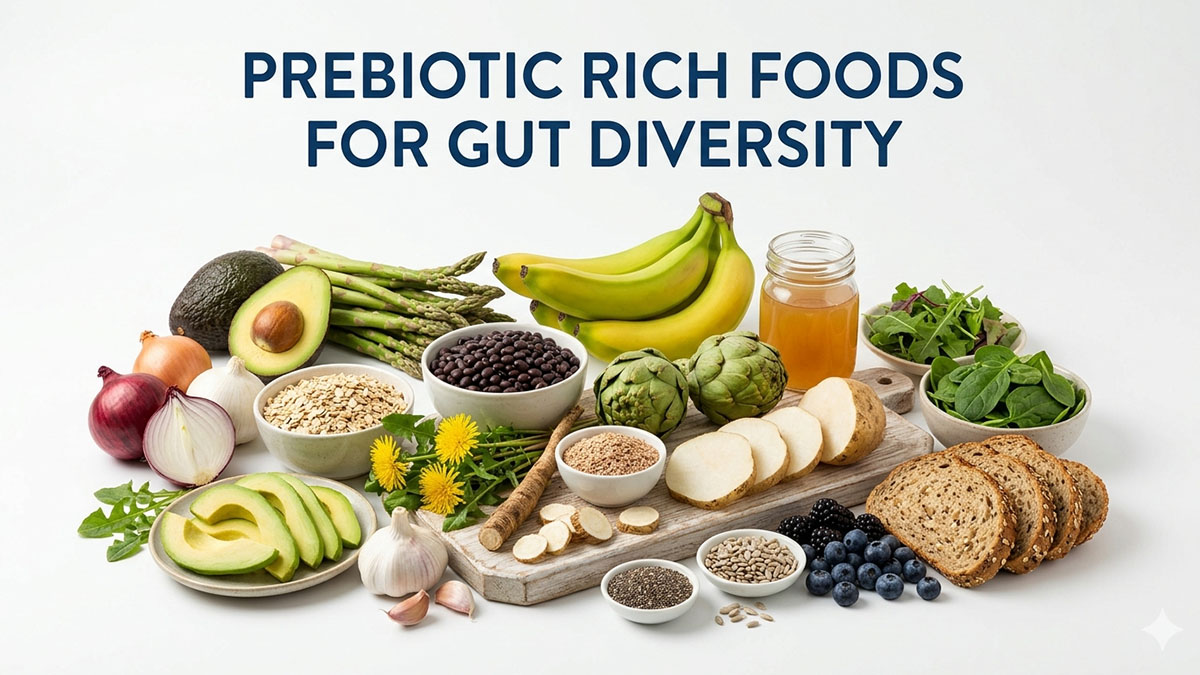
When we think about our health, we often focus on things we can see in the mirror, like our skin, our muscles, or our weight. However, some of the most important work in your body is happening in a place you can’t see at all. Deep inside your digestive system lives a massive community of trillions of tiny organisms, including bacteria, fungi, and viruses. This is known as your gut microbiome. For a long time, people thought all bacteria were bad, but we now know that having a diverse and thriving population of “good” bacteria is the secret to a strong immune system, a sharp mind, and even a stable mood. To keep this inner garden growing, you need to provide it with the right kind of fertilizer. This is where foods rich in prebiotics for gut diversity come into play. While probiotics are the live beneficial bacteria themselves, prebiotics are the specific types of fiber that feed those bacteria, allowing them to multiply and protect your health from the inside out.
To understand why you should care about foods rich in prebiotics for gut diversity, it helps to think of your gut as a complex ecosystem, much like a rainforest. In a rainforest, you want many different types of plants and animals to keep the system balanced. If only one type of plant grew, the whole system would become fragile. The same is true for your gut. When you eat a wide variety of prebiotic fibers, you are feeding different strains of bacteria, each of which has a different job to do. Some help you digest food, others produce vitamins, and some even send signals to your brain to help you stay calm. By focusing on a diverse range of plant-based foods, you are ensuring that no single group of bacteria takes over and that the “bad” bacteria don’t have enough room to cause trouble.
One of the most powerful and accessible foods rich in prebiotics for gut diversity is the humble onion. Onions, along with their cousins garlic, leeks, and shallots, are packed with a type of fiber called inulin. They also contain fructooligosaccharides, which sounds like a complicated word but simply refers to a natural sugar that your body doesn’t digest, but your bacteria love to eat. When you eat raw or lightly cooked onions and garlic, you are providing a feast for your microbiome. These foods help stimulate the growth of Bifidobacteria, which are known to prevent inflammation and improve heart health. The best part is that these ingredients are easy to add to almost any savory dish, making them a simple starting point for anyone looking to improve their gut health naturally.
Another superstar on the list of foods rich in prebiotics for gut diversity is the Jerusalem artichoke. This is not actually an artichoke, but a type of sunflower root that looks a bit like ginger. It is one of the most concentrated sources of inulin available in the plant kingdom. While it might not be a staple in every kitchen yet, it has a delicious, nutty flavor when roasted or sliced raw into salads. Because it is so high in prebiotic fiber, it is incredibly effective at increasing the population of beneficial microbes. However, if you are new to eating Jerusalem artichokes, it is wise to start with small portions, as your bacteria will be so excited to eat them that they might produce a bit of extra gas as a byproduct of the fermentation process.
We often hear that an apple a day keeps the doctor away, and when it comes to the microbiome, this old saying holds a lot of truth. Apples are fantastic foods rich in prebiotics for gut diversity because they contain pectin. Pectin is a type of soluble fiber that your gut bacteria break down into short-chain fatty acids. These fatty acids are like “superfuel” for the cells that line your colon, helping to keep the gut barrier strong and preventing unwanted substances from leaking into your bloodstream. Apples also help decrease the amount of harmful bacteria in the gut while boosting the “good” guys. To get the most benefit, try to eat the skin of the apple, as that is where a large portion of the fiber and antioxidants are stored.
Asparagus is another elegant addition to a gut-friendly diet. It is a wonderful source of prebiotic fiber that specifically supports the growth of healthy bacteria linked to improved digestion and better mineral absorption. When you include asparagus in your meals, you are helping your body get more out of the other healthy foods you are eating. Whether you steam it, grill it, or shave it raw into a slaw, asparagus provides a unique texture and a powerful punch of nutrition. It is one of those foods rich in prebiotics for gut diversity that makes your plate look beautiful while doing heavy lifting for your internal health.
For those with a bit of a sweet tooth, bananas can be a great ally, especially when they are slightly underripe. Green or greenish-yellow bananas are rich in resistant starch. Unlike the starch in a loaf of white bread, resistant starch “resists” digestion in the small intestine and travels all the way to the large intestine, where it becomes a primary food source for your microbes. As bananas ripen and turn brown, this starch turns into simple sugar, which is still tasty but less effective as a prebiotic. By choosing bananas that are just a little bit firm, you are choosing one of the best foods rich in prebiotics for gut diversity to support a stable and happy digestive tract.
Legumes, including lentils, chickpeas, and beans, are perhaps the most underrated group of foods rich in prebiotics for gut diversity. They are exceptionally high in various types of fiber that act as a slow-release fuel for your gut. People who eat a lot of legumes often have a much wider variety of bacteria in their systems than those who don’t. While some people avoid beans because they worry about digestive discomfort, the trick is to increase your intake slowly and drink plenty of water. Over time, your gut microbiome will actually adapt and become better at processing these fibers, leading to less gas and much better overall health. Legumes are affordable, versatile, and one of the most effective ways to build a resilient gut.
Whole grains like oats and barley also deserve a spot in your pantry. They contain beta-glucans, which are a type of prebiotic fiber known for lowering cholesterol and supporting a healthy immune system. When you eat a bowl of oatmeal in the morning, you aren’t just filling your stomach; you are sending a signal to your gut bacteria that it’s time to get to work. These grains help slow down digestion, which keeps your blood sugar stable and provides a long-lasting source of energy for both you and your microbes. Including a variety of whole grains is a key strategy when looking for foods rich in prebiotics for gut diversity, as it ensures you aren’t just relying on one type of fiber.
In conclusion, taking care of your gut is one of the most rewarding things you can do for your body. It doesn’t require expensive supplements or complicated diets. It simply requires a return to whole, fiber-rich plants that have been part of the human diet for thousands of years. By filling your plate with foods rich in prebiotics for gut diversity from onions and garlic to beans, apples, and oats you are acting as a responsible caretaker for your inner ecosystem. As your gut bacteria flourish, you will likely notice more energy, a clearer mind, and a stronger sense of well-being. Your gut does so much for you every single day; isn’t it time you gave it the fuel it needs to truly thrive? Start small, try one new prebiotic food this week, and watch as your inner garden begins to bloom.