
Switching to a lifestyle that prioritizes low-carbohydrate intake can feel like a daunting task, especially when you start realizing just how many hidden sugars and starches are tucked away in everyday foods. Many people begin this journey by cutting out bread, pasta, and potatoes, but they soon find themselves staring at an empty plate, wondering what is left to eat. The secret to long-term success isn’t about eating less; it is about eating differently. By focusing on the vast world of fiber-rich, nutrient-dense plants, you can enjoy massive portions that keep you full and energized while keeping your insulin levels stable. If you have been searching for clarity on what to buy during your next grocery trip, having a low carb vegetables list complete and easy to follow is the most important tool you can have in your kitchen arsenal.
To understand why some vegetables are better than others for weight management and metabolic health, we have to look at the difference between starch and fiber. Starchy vegetables, like corn and carrots, are essentially nature’s energy storage units. They are packed with glucose that enters your bloodstream quickly. On the other hand, non-starchy vegetables are mostly water and cellulose. Your body spends more energy digesting them than it actually gets from them in terms of calories. This is why a low carb vegetables list complete with leafy greens and cruciferous plants is the foundation of any healthy diet. These foods allow you to eat until you are physically satisfied without the “sugar crash” that usually follows a high-carb meal.
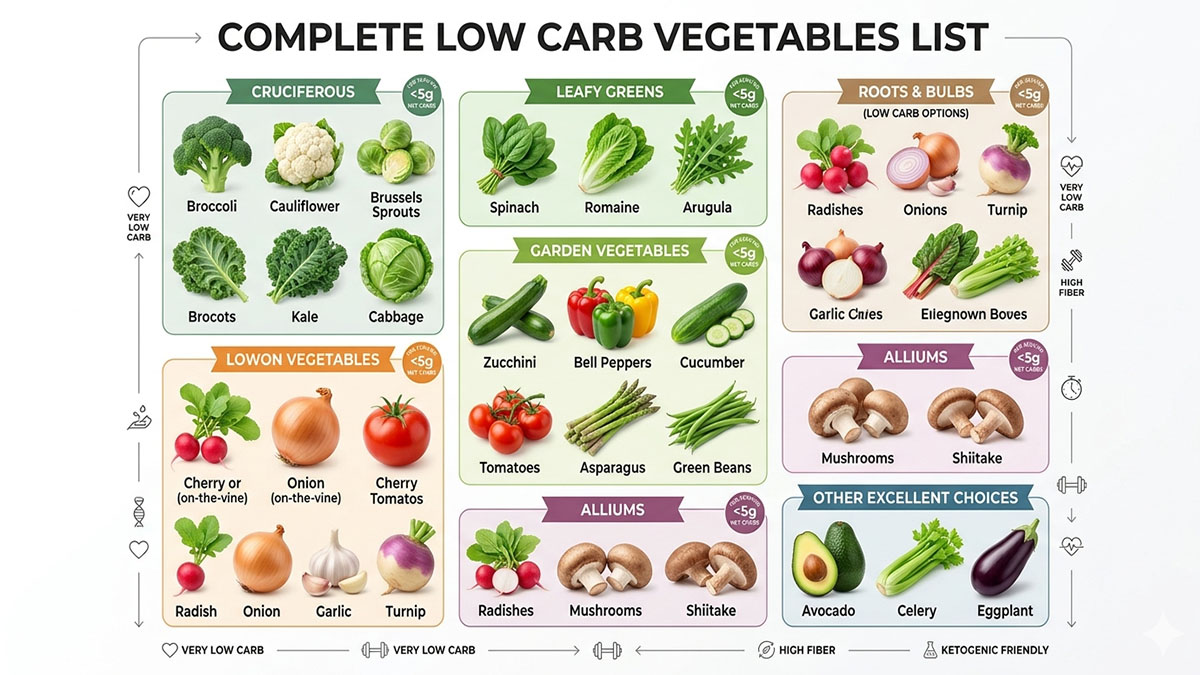
The undisputed kings of the low-carb world are leafy greens. Spinach, kale, arugula, and Swiss chard contain almost negligible amounts of net carbs. When we talk about net carbs, we are subtracting the fiber from the total carbohydrate count. Because fiber isn’t digested into sugar, it doesn’t count toward your daily limit. Leafy greens are so low in calories and carbs that you can practically eat them in unlimited quantities. They are also packed with magnesium and potassium, which are essential minerals that many people lack when they first transition to a low-carb diet. Adding a massive handful of spinach to your morning eggs or building a giant base of arugula for your lunch salad is the easiest way to add volume to your meals without compromising your goals.
Cruciferous vegetables are the next major category on our low carb vegetables list complete and versatile. This family includes broccoli, cauliflower, Brussels sprouts, and cabbage. Cauliflower, in particular, has become a superstar in the health community because of its ability to mimic high-carb favorites. You can mash it like potatoes, grate it into “rice,” or even bake it into a pizza crust. Broccoli is another powerhouse, offering a satisfying crunch and a wealth of vitamin C. These vegetables are slightly higher in carbs than spinach, but their high fiber content makes them very keto-friendly. The key is in the preparation; roasting these vegetables with olive oil and a dash of salt transforms them from a boring side dish into a delicious, savory highlight of your meal.
As you move through the produce aisle, you will encounter the “fruit-vegetables,” which are plants that we treat as vegetables but are botanically fruits. This includes zucchini, bell peppers, cucumbers, and tomatoes. Zucchini is a staple for those who miss pasta, as it can be spiraled into “zoodles” that hold sauce beautifully. Bell peppers add color and a hint of sweetness, though it is worth noting that red and yellow peppers have slightly more sugar than the green ones. Cucumbers are almost entirely water, making them the perfect hydrating snack. Tomatoes should be enjoyed in moderation, as they do contain a bit more natural sugar, but they are still a vital part of a low carb vegetables list complete with antioxidants like lycopene.
We cannot talk about low-carb living without mentioning the importance of aromatics and herbs. Onions and garlic are technically higher in carbs per gram, but because we use them in small amounts for flavoring, they are perfectly acceptable. However, if you are looking for a lower-carb alternative to onions, leeks or green onions (scallions) are excellent choices. Fresh herbs like parsley, cilantro, basil, and rosemary add incredible depth to your cooking without adding any carbs at all. By using these natural flavor enhancers, you can make your vegetable-heavy meals taste like they came from a professional kitchen, which makes sticking to your new lifestyle much more enjoyable.
One area where many people get confused is with root vegetables. Most roots, like potatoes, yams, and parsnips, are too high in starch for a strict low-carb diet. However, there are a few exceptions that deserve a place on your low carb vegetables list complete with variety. Radishes, for example, are surprisingly low in carbs and can be roasted to take on a texture very similar to potatoes. Turnips and jicama are also lower-carb alternatives that can provide that satisfying “crunch” or “starchy” mouthfeel without the massive insulin spike. These are the “secret weapons” of experienced low-carb cooks who want to recreate their favorite comfort foods without the metabolic consequences.
Mushrooms and asparagus are two more categories that should never be ignored. Mushrooms are unique because they provide a savory, “umami” flavor and a meaty texture, making them an excellent substitute for grains in many recipes. They are extremely low in carbs and high in B vitamins. Asparagus is another luxury vegetable that is very low in calories but feels incredibly fancy. Whether you grill it, steam it, or wrap it in a bit of turkey bacon, it provides a sophisticated addition to any plate. These vegetables prove that eating low-carb isn’t about restriction; it’s about exploring the rich variety of flavors that nature provides.
The way you cook these vegetables also matters for your results. Boiling vegetables often causes many of the water-soluble vitamins to leach out into the water. Instead, try steaming, sautéing, or roasting. Roasting is particularly effective because the high heat caramelizes the natural fibers, bringing out a hidden sweetness that you might not notice when eating them raw. Adding healthy fats like grass-fed butter, avocado oil, or extra virgin olive oil to your vegetables isn’t just about taste; many of the vitamins in these plants (like A, D, E, and K) are fat-soluble, meaning your body needs fat to absorb them properly. A well-dressed salad or a buttered bowl of steamed broccoli is much more nutritious than a dry one.
In conclusion, the path to a healthier version of yourself is paved with vibrant, colorful plants. By keeping a low carb vegetables list complete and accessible, you remove the guesswork from your daily routine. You can stop worrying about every single gram of carbohydrates and start focusing on the abundance of nutrients you are providing to your cells. Every time you choose a bell pepper over a piece of bread or zucchini noodles over wheat pasta, you are making a vote for your future health. Embrace the variety, experiment with new recipes, and watch as your energy levels stabilize and your body begins to thrive. Your plate should be a celebration of color and health, and with these low-carb heroes, it certainly can be.